
Top Nasal Sprays in Demand: A Comprehensive Guide

Nasal sprays are an essential part of the daily healthcare routine for millions of people. If you have seasonal allergies, nasal congestion, dryness, or sinus infections, these sprays will provide you with quick relief. Nowadays, you have so many options available in pharmacies and online stores. So, it is important to understand the different types of nasal sprays.
Nasal sprays have become one of the most commonly reached-for remedies for congestion, allergies, and sinus discomfort. Compact, fast-acting, and available in a wide range of formulations, they offer a convenient way to manage everything from seasonal hay fever to chronic rhinitis. For pharmacies, retailers, and healthcare providers, understanding which nasal sprays are consistently in demand, how they work, and what patients should know before choosing one is essential for providing informed guidance and maintaining well-stocked shelves.
In this guide, we will provide you with a list of the top nasal sprays in demand. We will also discuss their benefits, and how to choose the right one for your needs.
Understand the Nasal Sprays
Nasal Sprays are liquid medicines which get directly into the nasal passages. They target the affected area instead of going through the digestive system. The nasal sprays are most effective treatment for nasal issues. It can provide temporary relief or a long-term treatment option for the patients. Here are such:
- Stuffy or blocked nose
- Allergic rhinitis (hay fever)
- Sinus infections
- Nasal dryness
- Cold and flu-related congestion
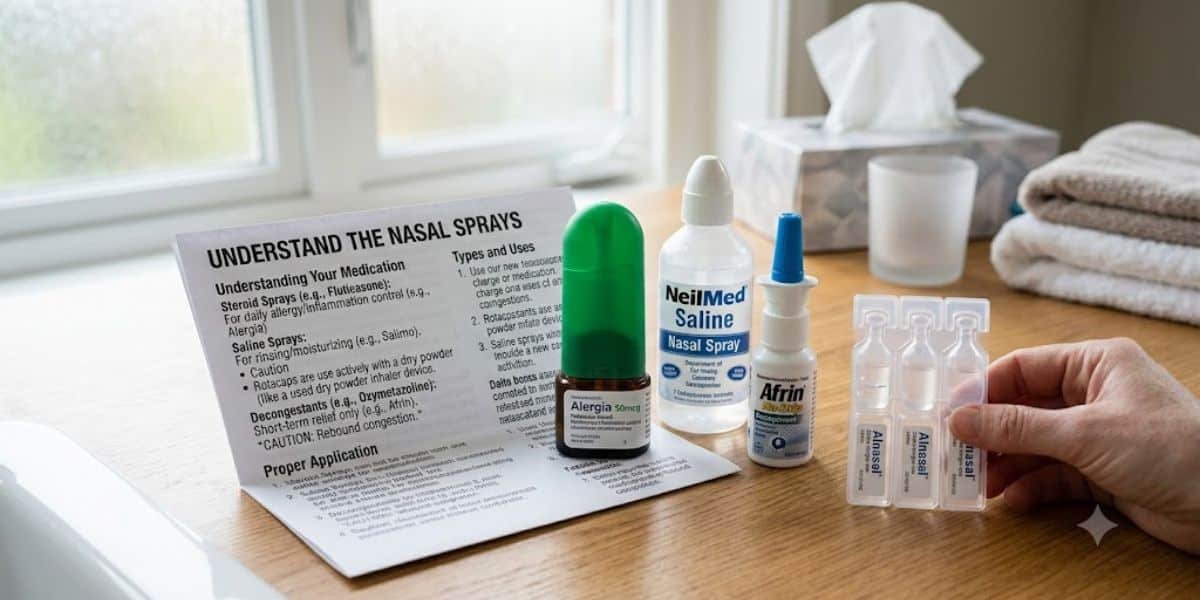
Types of Nasal Sprays
Before we explore about the top nasal spray in demand. We will have a look at the main categories:
1. Decongestant Nasal Sprays
- This sprays helps to reduce the swelling in the nasal passages
- Provide quick relief for the blocked nose.
- You cannot use the nasal spray for more than 3-4 days to avoid rebound congestion.
2. Saline Nasal Sprays
- It contains a saltwater solution.
- It’s safe for daily use.
- This can also provide a dry nasal passage and clear mucus.
3. Antihistamine Nasal Sprays
- It can block the effects of histamine.
- This is useful for allergies like hay fever and dust allergies.
4. Steroid Nasal Sprays
- This can reduce the rash in the nasal passages.
- It can be useful for regular allergies and sinus problems.
5. Combination Nasal Sprays
- This contains more than one active ingredient.
- This can provide multi-symptom relief.
Top Nasal Sprays in Demand
Here are some of the nasal sprays used:
1. Flanase (Fluticasone Propionate)
One of the most popular steroid nasal sprays. The Flonase is most commonly used to get relief from the allergies. It can reduce the inflammation, congestion, sneezing, and runny nose. You can use this nasal spray for long-term use under medical guidance. It is easily available in the market.
2. Afrin (Oxymetazoline)
Afrin is a decongestant spray and provide relief from the nasal congestion. It is a great for use if you are suffering from a cold or sinus infection. The only downside is that you should only use it for three days consecutively to avoid dependency.
3. Nasacort (Triamcinolone Acetonide)
Like Flonase, Nasacort is also a steroid spray to treat allergy symptoms. This spray is free from any fragrance and alcohol-free. The people who have sensitive skin they can also use this spray.
4. Otrivin (Xylometazoline)
Otrivin is a very popular nasal spray across many countries. It works quickly to relieve blocked nasal passages. Very much in demand, especially during the flu season, like Afrin, it is a quick fix for sore noses. Again, it is meant to be used for a short time.
5. Azelastine Nasal Spray
Azelastine nasal spray is an antihistamine spray for allergic rhinitis. It is effective for those who are looking for a non-steroid alternative to treat allergy symptoms, such as a runny nose and sneezing.
6. Rhinocort (Budesonide)
Rhinocort is a long-acting corticosteroid nasal spray for seasonal allergic rhinitis. This spray is safe for daily use and you should use this as per the prescription of doctor.
7. Saline Sprays (e.g., Simply Saline, Ocean Spray)
Saline sprays are completely drug-free and safe for all age of people. They help to keep the nasal passages moist and remove dust, allergens, and irritants.
8. Nasonex (Mometasone Furoate)
Nasonex is another well-known and commonly prescribed corticosteroid spray for the treatment of nasal polyps, sinusitis, and chronic allergic rhinitis.
9. Dymista (Azelastine + Fluticasone)
Dymista is another combination spray which provide both antihistamine and steroid relief. This spray is useful for individuals who are suffering from severe allergy symptoms.
10. NeilMed Sinus Rinse (Saline Irrigation Spray)
NeilMed is widely known as one of the most popular saline nasal rinse products. It can rinses clean out the sinuses and it is often recommended for chronic sinus problems.
What Is Rebound Congestion and How to Avoid It?
Rebound congestion medically called as rhinitis medicamentosa. It is one of the most significant thing to understand before getting a decongestant nasal spray. It happens when a decongestant spray is used for unusually longer than advised particularly beyond three to five consecutive days thus creating the nasal passages to rely on the medication to stay open.
Decongestant sprays operate by compressing the blood vessels in the nasal lining that minimizes swelling and clear blockage almost instantly. But with the continuous use over many days, the nasal tissue can become less responsive to the medication and more dangerous and risky to swelling after the effect wears off. This develops a cycle where the congestion returns usually worse than before. And continuously having dose upon dose will make the matter worse until the person feels unable to breathe normally without the spray.
Signs of rebound congestion include:
- Congestion that returns quickly after each dose wears off
- Needing to use the spray more frequently than originally prescribed
- Feeling unable to breathe through the nose without using the spray
- Symptoms that persist or worsen despite continued use
How to avoid it:
- Stick strictly to the recommended duration, generally no more than three to five days
- Switch to a saline spray or a corticosteroid spray for any congestion lasting longer than that window
- If rebound congestion has already developed, gradually tapering off the decongestant spray, sometimes with support from a corticosteroid spray, is usually more effective than stopping abruptly
- Consult a doctor or pharmacist if congestion persists beyond a week despite following usage guidelines
Because rebound congestion is one of the most common medication-related issues seen with nasal sprays, this is a key point pharmacy staff and retailers should proactively communicate to customers picking up decongestant sprays, especially first-time users.
Nasal Spray vs Nasal Drops: Which Works Better?
Both nasal sprays and nasal drops aim to deliver relief directly to the nasal passages, but they differ in how the medication is dispersed and who they tend to suit best.
Nasal Sprays
- Deliver a fine, even mist that coats a larger surface area of the nasal lining
- Generally easier to dose accurately, since most devices deliver a consistent, metered amount per spray
- More convenient for regular, ongoing use, including allergy management
- Widely available across saline, antihistamine, corticosteroid, and decongestant formulations
Nasal Drops
- Deliver a liquid dose via a dropper, which can pool in one area rather than coating the nasal lining evenly
- Often preferred for infants and young children, where a controlled, gentle drop is easier to administer than a spray
- Dosing can be less precise, as it depends on positioning and drop count
- Commonly used for short-term relief or in paediatric care settings
Which is better? For most adults and older children managing allergies or general congestion, sprays tend to offer more even coverage and easier dosing. For infants or very young children, drops are often the more practical and gentler option, particularly when guided by a pediatrician’s instructions.
Nasal Sprays for Children vs Adults
Choosing the right nasal spray differs meaningfully between children and adults, both in terms of formulation strength and appropriate usage guidance.
For Children
- Saline sprays or drops are generally the safest first option for clearing congestion, including in infants
- Medicated sprays, including corticosteroid or antihistamine formulations, should only be used in children under specific dosing guidance from a pediatrician or pharmacist
- Decongestant sprays are typically not recommended for young children due to a higher risk of side effects and rebound congestion
- Device design matters: many paediatric formulations use softer, smaller nozzles designed for a child’s smaller nasal passages
For Adults
- Adults generally have more flexibility across all categories, from saline to corticosteroid to decongestant sprays
- Adults are more likely to be managing chronic conditions like allergic rhinitis, making longer-term corticosteroid use more common
- Adults should still strictly observe decongestant duration limits, as the risk of rebound congestion applies regardless of age
Pharmacists and retail staff play a valuable role in confirming which formulation and strength is appropriate before recommending a nasal spray for a child, since many packaging labels use adult-focused dosing language that can be easy to misinterpret.
Quick Glossary for Customers and Pharmacy Staff
| Term | Definition |
| Rhinitis | Inflammation of the nasal passages, often caused by allergies, infection, or irritants, leading to congestion, sneezing, and a runny nose. |
| Rebound Congestion (Rhinitis Medicamentosa) | A condition where nasal congestion worsens due to overuse of decongestant nasal sprays beyond the recommended duration. |
| Decongestant | A medication that reduces nasal swelling by constricting blood vessels, providing fast but short-term relief from congestion. |
| Corticosteroid (nasal) | An anti-inflammatory medication used in nasal sprays for long-term control of allergy symptoms and nasal inflammation. |
| Antihistamine | A medication that blocks histamine receptors, reducing sneezing, itching, and runny nose symptoms triggered by allergies. |
| Saline Solution | A gentle salt-water solution used to moisturise and clear nasal passages without medicated side effects. |
| Allergic Rhinitis | A chronic allergic condition causing recurring nasal inflammation, often triggered by pollen, dust, or pet dander. |
Allergy and Sinus Health: A Quick Snapshot
Allergic rhinitis and chronic sinus-related conditions remain among the most common reasons people seek over-the-counter nasal relief. Global health data consistently shows allergic rhinitis affecting a significant portion of the population, with prevalence often highest among school-aged children and working-age adults, and rates tending to rise in urban areas with higher pollution and allergen exposure.
Various Factors Affecting the Demand for Nasal Sprays
Going up, nasal spray demand is a result of:
- For High Allergies: due to the increase of pollution and lifestyle changes the allergies are increasing globally.
- Convenience: The nasal sprays provide on-the-spot and immediate treatment for the issues like congestion.
- Easy Treatment: The nasal sprays do not require swallowing pills. They are less invasive provide low side effects.
- Availability: The nasal sprays are easily available in the market. You can easily find them in chemist shop.
Final Thoughts
Nasal sprays are best in the treatment of congestion, allergies, and sinuses. There are many types of sprays available according to everyone’s needs. Your symptoms and medical condition will dictate the appropriate nasal spray. If you are suffering from a stuffy nose then a decongestant can suit you. If you are looking for long-term control over an allergy then you can use steroid or antihistamine spray.
Frequently Asked Questions (FAQs) About Top Nasal Sprays in Demand
Can I use nasal sprays every day?
You can use saline and steroid nasal sprays every day (under medical supervision). However, you should not use decongestant sprays more then 3–4 days.
Can children use nasal sprays?
Yes, saline nasal sprays are safe for children. You should look for age indicators on the label and speak to a pediatrician before use.
What is rebound congestion?
The rebound congestion is when you abuse decongestant nasal sprays. Your nose becomes even more blocked when the effect instead of relief.
Can I take nasal spray and other medicines together?
Yes, nasal sprays are often used in conjunction to achieve better reduction of allergy symptoms. However, You should always talk to your doctor before using two medicines together.
What is the best nasal spray for long-term allergies?
The most common types of sprays that are used for long-term allergy management are steroid sprays like Flonase, Nasacort, and Nasonex.
Is it safe to use a nasal spray every day long-term?
This depends on the type of spray. Saline sprays are safe for daily long-term use, and corticosteroid sprays are often designed for regular daily use as directed. Decongestant sprays, however, are not intended for long-term daily use due to the risk of rebound congestion.
Can I use more than one type of nasal spray at the same time?
In some cases, combining a saline spray with a medicated spray is fine and can even improve effectiveness by clearing passages first. However, combining multiple medicated sprays should only be done under guidance from a pharmacist or doctor to avoid interactions or overuse.
What are signs that I should see a doctor instead of using an over-the-counter nasal spray?
Symptoms lasting more than a week, accompanied by facial pain, fever, thick discoloured discharge, or a worsening condition despite over-the-counter treatment, are signs that a doctor’s evaluation may be needed rather than continued self-treatment.
Do nasal sprays have side effects?
Some users may experience mild nasal irritation, dryness, or a temporary burning sensation, particularly with medicated sprays. Decongestant sprays carry the specific risk of rebound congestion with extended use. Any persistent or severe side effects should be discussed with a healthcare provider.
How should nasal sprays be stored?
Most nasal sprays should be stored at room temperature, away from direct sunlight and excessive heat or moisture, with the cap securely closed between uses to prevent contamination.